Demon Energy Is the New Confidence: How Oni Culture Became a Way of Moving Through the World
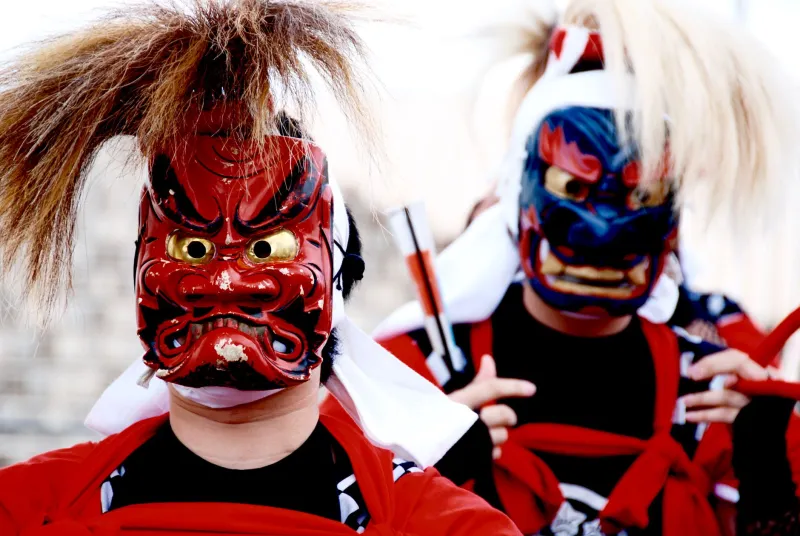
There's a reason the oni keeps showing up everywhere — not just on hoodies and snapbacks, but in the way people talk, the energy they project, the unapologetic way a certain type of person walks into a room. The horned demon of Japanese folklore wasn't supposed to be a lifestyle icon. But here we are.
And honestly? It makes complete sense.
Where the Oni Actually Comes From
Before we get into why demon energy resonates so hard right now, it's worth understanding what the oni actually represents in its original context. In Japanese mythology, oni are complex figures — not simply evil, not simply good. They're chaotic. They're primal. They enforce cosmic consequences and carry the weight of raw, unfiltered force. In some traditions, they're terrifying. In others, they're protectors. In almost every version, they are unapologetically themselves.
That duality — powerful and feared, but also honest in a way that polished, "acceptable" figures never are — is exactly what's been quietly building a cult following in American culture. The oni doesn't perform. It doesn't optimize for likability. It just is.
For a generation raised on curated Instagram aesthetics and LinkedIn-optimized personal brands, that kind of raw authenticity hits like a breath of actual air.
Why "Oni Energy" Became Shorthand for Something Real
Spend enough time in streetwear communities, anime fandoms, or the corners of social media where Japanese subculture bleeds into American youth identity, and you'll start hearing the phrase "oni energy" used to describe a person — not a product. It refers to someone who moves with conviction. Someone who doesn't shrink. Someone who wears their intensity without apology.
This isn't just aesthetic admiration. It's a personality framework.
Gen Z, more than any generation before them, has had to navigate the exhausting performance of being "on" at all times — socially, professionally, digitally. The pressure to be likable, relatable, and perfectly packaged is relentless. Against that backdrop, the oni archetype offers something genuinely countercultural: the idea that your rougher edges aren't liabilities. They're the point.
Wearing oni energy means choosing presence over polish. It means letting your intensity be visible instead of filing it down to make other people comfortable.
From Folklore to the Feed: How the Symbol Traveled
The visual language of the oni — those bold horns, the wide grimace, the striking color palette of red and indigo — has been circulating in American streetwear for years. But something shifted. The symbol stopped being purely decorative and started functioning as a kind of identity marker.
Part of that shift happened through anime. Characters built around oni mythology or demon-adjacent power — think Demon Slayer, Jujutsu Kaisen, and deeper cuts in the genre — gave American audiences a sustained, emotionally complex relationship with the archetype. These weren't one-dimensional monsters. They were characters wrestling with power, identity, and what it costs to be different. That resonated. Hard.
From there, the visual language migrated into music, tattoo culture, custom sneaker art, and eventually into the broader conversation about what "confidence" actually looks like. The oni stopped being a Japanese symbol that Americans borrowed and became something American youth culture metabolized into its own statement.
Rejecting Performative Perfection
Here's the cultural tension that the oni aesthetic keeps pointing at: mainstream American success culture is obsessed with the idea of the "polished" person. The one who's got it together. The one who never lets the seams show. That ideal is everywhere — in hustle-culture content, in corporate aesthetics, in the way social media rewards carefully lit, carefully worded, carefully timed self-presentation.
Oni energy is the direct rejection of that.
It says: I'm not here to be palatable. I'm here to be real. My power isn't hidden behind perfect packaging — it's visible in how I move, what I wear, and what I refuse to apologize for.
This is why the aesthetic has found such a natural home in streetwear specifically. Streetwear has always been about reclaiming power through self-presentation — using clothing as a form of communication that operates outside the rules of whoever's in charge. The oni fits that tradition perfectly. It's a symbol of force that exists outside sanctioned hierarchies. It doesn't ask permission.
What It Looks Like in Practice
So what does embodying oni energy actually look like in 2025, beyond the gear?
It looks like the person who doesn't over-explain themselves in a room full of people who don't understand them yet. It looks like confidence that doesn't need external validation to stay intact. It's the willingness to take up space — physically, creatively, socially — without the constant hedging and self-minimization that anxious, approval-seeking culture demands.
It's also, importantly, not about aggression. The oni archetype is intense, but it's not reckless. In many Japanese traditions, oni are described as disciplined forces — powerful precisely because that power is directed, not scattered. That's the nuance that gets lost when people reduce "demon energy" to just being loud or confrontational. Real oni energy is focused. It's controlled intensity. It knows when to let the horns show and when to move in silence.
An Oversaturated Market, and Why Authentic Symbols Cut Through
American consumers — especially younger ones — are drowning in options and starving for meaning. Every brand wants to sell them identity. Every product claims to be the one that finally makes them feel like themselves. In that environment, symbols with actual depth and history land differently.
The oni carries centuries of cultural weight. It's not a logo a marketing team invented last quarter. It's not a trend that appeared because an algorithm decided edgy was converting. It's a symbol that has meant something — that has stood for primal force, for complexity, for the refusal to be easily categorized — for a very long time.
That staying power is exactly what resonates with people who are tired of hollow aesthetics. Wearing the oni, or embodying its energy, feels like opting into something that actually has roots. Something that won't look embarrassing in three years because it was never built on a trend in the first place.
The Edge Isn't a Look. It's a Stance.
At Oni Cloth, we've always believed that what you wear is only part of the statement. The other part is how you carry it — the conviction behind the fit, the attitude that makes the clothes mean something. The oni aesthetic, in its fullest expression, is about that second part.
It's not enough to put on the mask. You've got to have the energy to back it up.
And for a generation that's been told to smooth out their edges, to optimize their personalities, to be endlessly likable and endlessly available — choosing to show up with demon energy is, quietly, one of the most radical things you can do.
Wear the edge. Define the culture. The oni was always about exactly that.