Beautifully Broken: Why the Most Interesting Clothes Right Now Look Like They're Still Being Made
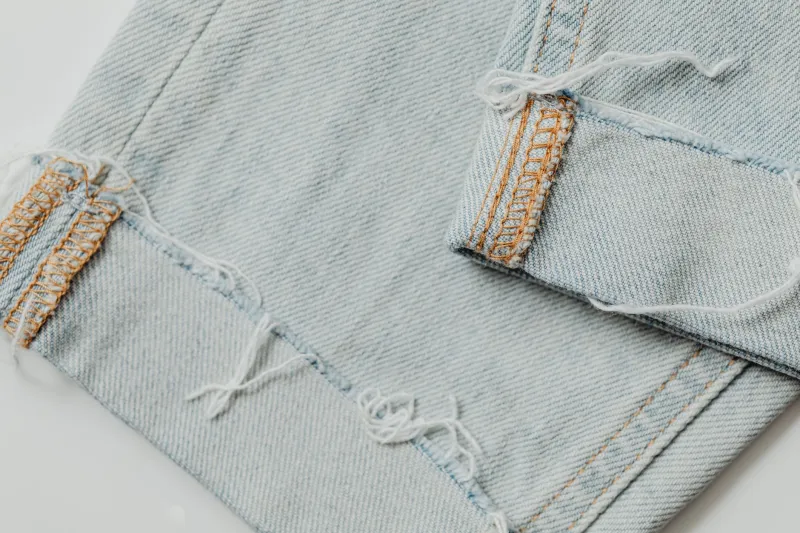
There's a seam running down the outside of a jacket. It's exposed. Thick. Intentional. And to someone raised on the glossy, vacuum-sealed perfection of mall fashion, it looks wrong.
To pretty much everyone else right now? It looks exactly right.
Something has been shifting in American streetwear and contemporary fashion over the last few years — quietly at first, then all at once. The aesthetic of immaculate construction, the kind where every edge is finished, every proportion is calculated, every garment looks like it was assembled by a machine that never had a bad day, is starting to feel cold. Sterile. Like wearing a terms-and-conditions agreement.
What's replacing it is messier, more human, and honestly a lot more interesting.
The Seam Is the Statement
When designers started leaving construction details visible — exposed overlocking, inside-out seams, unfinished hems that fray just enough — the initial reaction from mainstream fashion spaces was confusion. Were these brands cutting corners? Was this a supply chain problem dressed up in PR spin?
It wasn't. It was a deliberate rejection of the idea that clothing should look like it appeared out of nowhere, fully formed and flawless.
Exposed construction tells a story. It says: someone made this. There were hands involved. Decisions were made, thread was pulled, fabric was manipulated. The garment isn't pretending to be a product — it's being honest about being a craft.
For a generation that grew up watching fast fashion churn out thousands of identical pieces at prices that were only possible because of conditions nobody wanted to think too hard about, that honesty hits different. The visible seam is essentially a receipt. Proof of process. And right now, process is everything.
Wabi-Sabi Didn't Stay in Japan
If you've spent any time in Japanese streetwear or design culture, none of this is surprising. The concept of wabi-sabi — a worldview rooted in finding beauty in impermanence, incompleteness, and imperfection — has been embedded in Japanese craft ethics for centuries. It's why a tea bowl with an asymmetrical lip is considered more beautiful than a perfect one. Why aged indigo denim that's cracked and faded at the knees tells a better story than a stiff, untouched pair.
Japanese brands have been translating wabi-sabi into garment construction for decades. Intentional irregularities in weaves. Asymmetrical hems. Fabric that's meant to distort and shift with wear. The philosophy isn't that imperfection is acceptable — it's that imperfection is where the meaning lives.
What's happening now is that American consumers are genuinely internalizing this, not just aesthetically lifting it. The difference matters. It's one thing to buy a piece that looks distressed because a marketing team decided that was on-trend. It's another to actively seek out garments where the construction process is visible because you understand what that visibility is communicating.
That second group is growing fast.
DIY Ethics and the Anti-Polish Movement
You can't talk about this shift without acknowledging where DIY subculture fits in. Hardcore kids safety-pinning patches onto jackets. Punk scenes where a perfectly hemmed pair of pants would've gotten you clocked as a poser. Zine culture where the smeared ink and crooked cut-and-paste layouts were the whole point — proof that a real person made this in their bedroom, not a corporate design team in a glass office.
Those ethics never really went away. They just went underground for a while, waiting for the right cultural moment to resurface.
Gen Z pulled them back up. This is a generation that grew up watching everything get optimized, filtered, and A/B tested into oblivion. Feeds full of content so polished it barely feels human. Products designed by algorithm. Aesthetics that existed for about four months before being declared dead by the same platforms that invented them. At some point, the polish itself became the red flag.
Raw edges and visible hand-stitching don't just look cool in that context — they function as a kind of protest. A refusal to participate in the performance of effortless perfection that's been the dominant mode of both fashion and social media for the better part of a decade.
Asymmetry as Attitude
Beyond exposed construction, the move toward asymmetrical cuts is doing similar cultural work. A collar that sits higher on one side. A hem that drops longer in the back. A sleeve that's deliberately cut to fall differently than its pair.
Traditional fashion logic treated symmetry as a baseline requirement — anything that deviated from it was an error to be corrected before a piece hit the floor. Now that deviation is the design. And it's making people look twice in a way that perfectly balanced garments just don't.
Part of what makes asymmetry work as a statement is that it requires the wearer to own it. You can't accidentally pull off an off-kilter silhouette. You have to commit to it, style around it, move through the world in it with enough conviction that it reads as intentional. That's a different kind of confidence than wearing something universally flattering and technically correct. It's the confidence of someone who decided for themselves what looks right.
That's a very Oni Cloth kind of energy, honestly. Wearing the edge means sometimes the edge is literal.
What This Means for How You Shop
The practical implication of all this is that the way people evaluate clothing is changing. The question used to be: is this well-made? Meaning: are the seams hidden, the proportions standard, the finish clean?
The question now is more like: is this honest? Does this piece show me something real about how it exists? Does it have a point of view that doesn't dissolve the second I look at it closely?
That shift is bad news for fast fashion, which built its entire model on producing the illusion of quality — garments that looked fine on a hanger but communicated nothing and fell apart after six washes. It's good news for smaller brands, independent designers, and anyone making clothes with actual intent behind the construction choices.
It also means the bar for what counts as interesting has gotten higher in a specific way. It's not enough to just be imperfect. Imperfection for its own sake is just sloppiness. The brands getting it right are the ones where every raw edge and every exposed stitch feels like a decision — where you can look at the garment and understand why it was made the way it was made.
That understanding is the whole point. Fashion that makes you think about what you're wearing, how it was made, and what it's saying about the person wearing it — that's not a trend. That's a standard.
And once you start holding your wardrobe to it, the perfectly finished stuff starts looking a lot less perfect.