East Meets West: How Japanese Street Style Quietly Rewrote the Rules of American Fashion
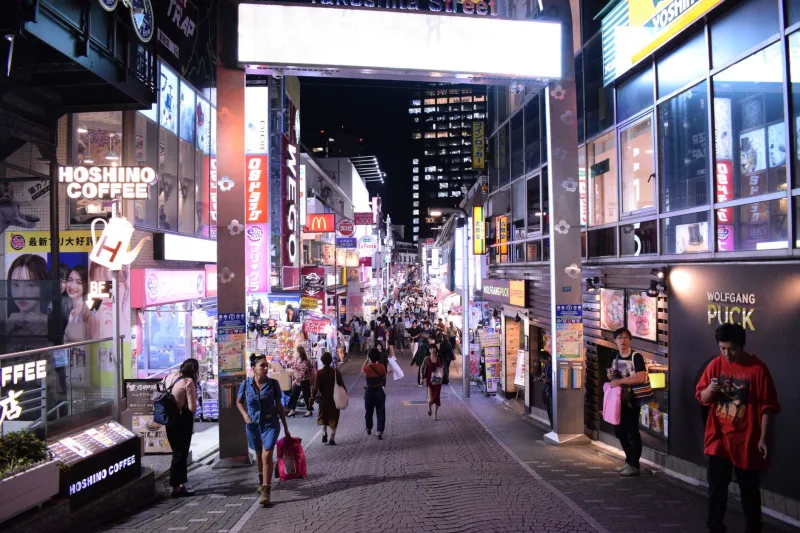
Long before algorithm-driven trends dominated our feeds, a creative current was flowing from the backstreets of Harajuku and Shibuya straight into the DNA of American style. Japanese streetwear didn't just influence US fashion — it fundamentally changed how we think about what clothes are supposed to say. Here's how it happened, and why it still matters.
The Origin Story Nobody Talks About Enough
Let's rewind. The late 1980s and early 1990s in Japan were a cultural pressure cooker. Young people in Tokyo were absorbing American hip-hop, West Coast skate culture, and military surplus aesthetics — then filtering all of it through a distinctly Japanese design sensibility. The result wasn't imitation. It was transformation.
Brands like A Bathing Ape (BAPE) emerged from this moment with a swagger that felt entirely new. Nigo, the brand's founder, took the oversized silhouettes and bold graphics of American streetwear and pushed them somewhere wilder — camo patterns that had no business being that loud, hoodies that felt like collectible art, a brand identity so tight it bordered on cult status. When BAPE eventually landed stateside in the early 2000s, American consumers didn't just buy the clothes. They bought into a whole philosophy.
Around the same time, Comme des Garçons — already a fixture in avant-garde fashion circles — was proving that Japanese design could operate at the highest levels of international style. Rei Kawakubo's work challenged the very idea of what a garment should do. Asymmetry, deconstruction, intentional imperfection — these weren't flaws, they were the point. American fashion editors, stylists, and eventually everyday consumers started to absorb this lesson: clothing could be a statement without being a slogan.
Stüssy and the Bridge Between Worlds
If there's one brand that physically embodied the cultural handshake between Japan and the US, it's Stüssy. Founded in Laguna Beach by Shawn Stussy in the early 1980s, the brand built something rare — a genuine international tribe. By the late '80s and through the '90s, Stüssy had deep roots in Tokyo's underground scene, collaborating with Japanese retailers and tapping into a network of style-conscious consumers who saw the brand as a shared language.
What made this exchange meaningful wasn't just commerce. Japanese consumers and creatives brought their own rigor to Stüssy's laid-back California energy. The attention to fabric quality, the precision in fit, the reverence for limited-edition drops — these values flowed back across the Pacific and shaped how American streetwear brands started operating. The hype-drop model that defines so much of today's sneaker and streetwear culture? You can trace a straight line back to those Tokyo collabs.
Minimalism, Maximalism, and the Space Between
One of the most interesting things about Japanese streetwear's influence on American style is how it managed to hold two opposing ideas at the same time. On one end, you have the clean lines and restrained palettes of brands like Uniqlo — which has become a genuine staple in American wardrobes — and the quiet luxury sensibility that Japanese designers helped normalize long before 'quiet luxury' became a TikTok trend. On the other end, you have the graphic-heavy, logo-saturated, maximalist energy of BAPE, Evisu, and later brands like Neighborhood and Wtaps.
American fashion has always been pretty good at loud. What Japanese design taught US consumers was how to be intentional about it. There's a concept in Japanese aesthetics called ma — roughly translated as negative space or purposeful pause. You see it in the way a well-constructed Japanese streetwear piece uses a single graphic element on an otherwise stark canvas. The empty space isn't an absence; it's doing work. That idea seeped into American design in ways that are now so embedded we don't even notice them.
The Cultural Exchange Keeps Moving
Fast-forward to today and the conversation has only gotten more interesting. American artists and designers are citing Japanese influences openly — Virgil Abloh, Kanye West, and Pharrell Williams have all pointed to Japanese streetwear as formative. Meanwhile, Japanese brands continue to evolve, with labels like Sacai and Undercover pushing construction and concept to places that keep American fashion editors paying close attention.
Street culture in the US has also embraced Japanese graphic traditions — from ukiyo-e-inspired prints on bomber jackets to oni masks and koi fish rendered in embroidery on varsity-style pieces. These aren't just decorative choices. For a generation of American consumers who grew up on anime, manga, and Japanese gaming culture, these visual languages feel personal. They're part of the cultural vocabulary.
Why It Still Resonates
Here's the honest truth: Japanese streetwear's staying power in American fashion isn't just about aesthetics. It's about attitude. Japanese street style — at its core — has always been about refusing to accept the mainstream version of cool. It's about finding your own lane, building community around shared taste, and treating what you wear as an extension of who you actually are.
That's a value set that translates across every culture and every generation. Whether you're lacing up a pair of Nike collabs designed out of Tokyo, pulling on a graphic tee that nods to traditional Japanese iconography, or just rocking a silhouette that owes its proportions to Harajuku's golden era — you're part of a conversation that's been building for decades.
At Oni Cloth, we live inside that conversation. The edge we talk about isn't just a sharp collar or a bold print. It's the edge between cultures, between tradition and rebellion, between what fashion was and what it's still becoming. Japanese streetwear drew that line. American style crossed it. And the best stuff happening right now lives right in that middle ground.
Wear the edge. That's not just a tagline — it's the whole story.