From Screen to Street: 10 Ways Anime Aesthetics Are Reshaping What Americans Actually Wear
Not too long ago, wearing anime-inspired clothing in the US outside of a convention center came with a certain social risk. You were either deep in the fandom or you were confused. There wasn't much middle ground.
That's done now. Anime aesthetics have fully crossed over into American streetwear — not as a novelty or a niche signal, but as a legitimate design language that's influencing silhouettes, graphics, color choices, and styling decisions at every level of the market. From high-end collaborations to independent labels to what people are actually putting together in their own closets, the influence is everywhere.
But there's a version of this that's thoughtful and a version that's lazy. The difference matters — both for how the fit reads and for the broader question of how a culture gets represented when it travels. Let's break down what's actually happening, piece by piece.
1. Oversized Silhouettes Borrowed from Shonen Heroes
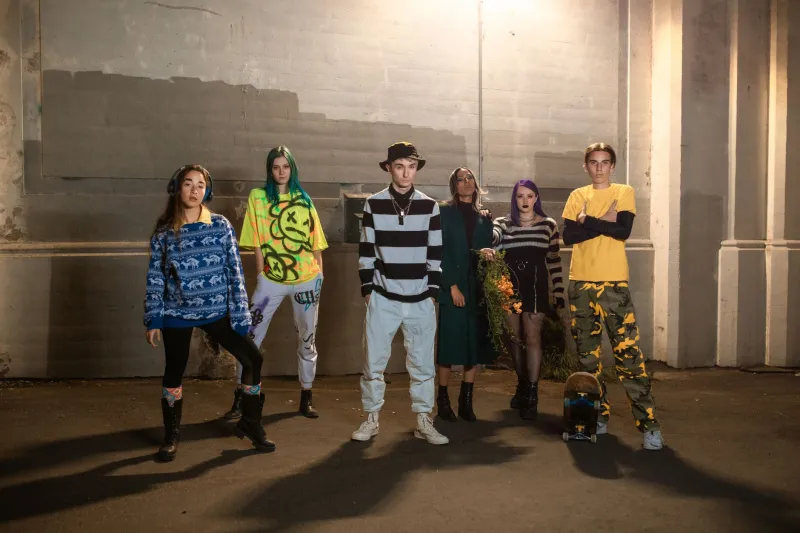
If you've noticed that American streetwear has been getting progressively more oversized over the past several years, anime isn't the only reason — but it's a significant one. The exaggerated proportions that define shonen character design (massive shoulders, flowing capes, wide-leg pants) have filtered into how younger American consumers think about fit. A dropped-shoulder hoodie or a wide-leg trouser reads differently now than it did ten years ago. There's a visual vocabulary attached to it.
Styling tip: Commit to the proportion. An oversized top needs a grounded bottom — either slim-cut pants or heavy boots — to keep the silhouette from reading sloppy rather than intentional.
2. Kanji and Japanese Typography as Graphic Elements
Japanese characters have been appearing on Western clothing for decades, but the current wave is more considered than earlier iterations. Instead of generic phrases slapped on a front panel, designers are working with specific kanji that carry genuine meaning — words related to strength, persistence, duality, or spiritual concepts — and treating the typography as a design element rather than an afterthought.
The caveat here is obvious: if you're wearing kanji, know what it says. This sounds basic, but the number of people who've ended up with nonsense or unintended phrases on their clothing is genuinely staggering. Authenticity starts with accuracy.
3. Character-Referenced Graphics Done Right
There's a spectrum here. On one end: a direct screen-print of a character from a popular series, which reads as fandom wear regardless of how it's styled. On the other end: a graphic that references an aesthetic, archetype, or visual motif from anime culture without being a direct reproduction. The second approach gives you much more flexibility in how the piece functions in an outfit.
Look for original artwork that draws from anime's visual language — the linework style, the color saturation, the character archetypes — rather than licensed imagery. That's where the crossover between fandom and fashion credibility actually lives.
4. Color Palettes Pulled from Iconic Series
Anime has a distinctive relationship with color — high-saturation primaries, dramatic contrast, specific combinations that become iconic through association. Think the red-and-black of certain combat aesthetics, or the electric blues and whites that show up across action series. These palettes have started showing up in American streetwear in ways that don't require any direct reference to work.
A red-and-black colorway on a structured jacket hits differently when the cultural context is there, even implicitly. You don't need to explain the reference for it to land.
5. Layering as Armor
Anime characters layer. A lot. Multiple garment layers — some functional, some purely visual — are a staple of character design across genres. This has translated directly into how anime-influenced American consumers approach getting dressed. The layered look isn't just about warmth or practicality. It's about building visual complexity, creating silhouette depth, and — not coincidentally — evoking the sense that you're wearing something constructed rather than just thrown on.
A base layer, a mid-layer with visual interest, and an outer piece with structural presence is the basic formula. Mix textures to keep each layer readable.
6. The Utility-Meets-Mysticism Crossover
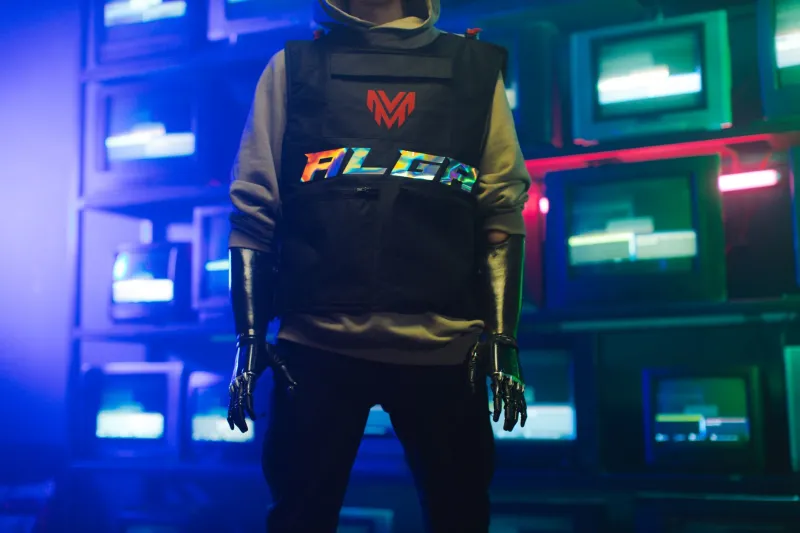
One of the more interesting aesthetic intersections happening right now is between anime's tradition of characters who blend practical gear with spiritual or supernatural elements — the warrior monk, the street-level mage, the urban ronin — and the techwear/utility trend that's been building in American streetwear. Cargo pockets next to embroidered spiritual symbols. Technical fabrics printed with traditional Japanese patterns. It's a specific kind of visual tension that feels genuinely contemporary.
This is also where brands like Oni Cloth operate most naturally — in the space between functional design and mythological visual language.
7. Footwear as Punctuation
Anime doesn't ignore footwear, and neither should you. The specific shoe choices that have emerged from anime-influenced styling tend toward two poles: heavy, chunky soles that add visual weight and ground an oversized fit, or traditional Japanese-influenced silhouettes (tabi-toe designs, elevated platforms) that bring cultural texture to the overall look. Both approaches treat footwear as a statement rather than an afterthought.
8. Accessories as Worldbuilding
In anime, accessories tell you who a character is. The specific pendant, the wrapped wrist, the mask worn around the neck — these details carry narrative weight. Anime-influenced American dressers have absorbed this logic. A single well-chosen accessory — a carved oni pendant, a specific ring, a bandana worn in a particular way — can shift the entire context of an outfit.
This is also where the line between thoughtful cultural engagement and costume territory gets relevant. An accessory that carries genuine cultural meaning deserves to be worn with that meaning in mind.
9. The Graphic Tee as Gateway
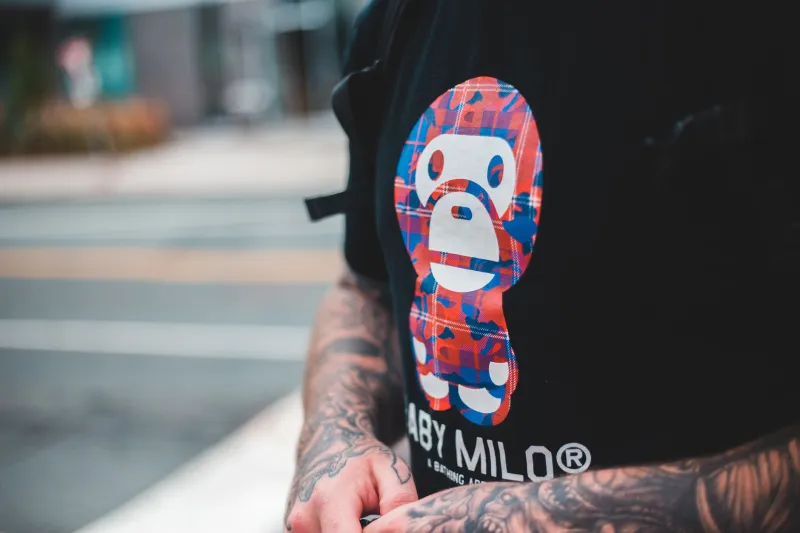
For a lot of people, the entry point into anime-influenced fashion is the graphic tee — and that's completely valid as a starting point. The key is curation. A tee with original artwork that engages with anime aesthetics, styled with pieces that build on the same visual language, is a coherent outfit. The same tee worn with completely unrelated pieces reads as a single item rather than a perspective.
Think about what the tee is in conversation with. That's the difference between a fit and a shirt.
10. The Confidence to Commit
The single most important element in pulling off anime-influenced fashion in an American context — and this applies to dark aesthetics broadly — is the willingness to commit. Half-measures read as uncertainty. A person who clearly knows what they're building and has made deliberate choices throughout commands attention in a way that a tentative approach never does.
Anime as a cultural form is bold. The visual language is maximalist, the emotional register is high, and the characters who resonate most are the ones who fully inhabit who they are. Bring that energy to how you get dressed, and the fit follows.
The Bottom Line
Anime's influence on American streetwear isn't a trend waiting to reverse. It's a permanent expansion of the visual vocabulary available to people who care about what they wear. The culture has been absorbed, and the absorption was largely mutual — American streetwear changed anime fandom culture too, creating something genuinely new in the overlap.
Navigating that overlap well means doing the work: understanding the references, making deliberate choices, and treating the aesthetic as a living thing rather than a costume to put on and take off. When you get it right, the fit doesn't just look good. It says something real.