Big Clothes, Bigger Energy: Why Oversized Fits Are the Realest Power Move of 2025
There's a certain kind of confidence that doesn't announce itself. It doesn't cling to you, doesn't highlight every curve or flex every line. It just moves — unhurried, unbothered, taking up exactly as much space as it wants. That's what a great oversized fit does in 2025. It doesn't ask for your approval. It already assumed it.
Loose silhouettes have been circling back for a while now, but what's happening this year feels different. This isn't 90s nostalgia being repackaged for TikTok. It's not a trend cycle doing its predictable rotation. The shift toward volume, drape, and intentional bagginess is starting to feel less like a style preference and more like a cultural stance — and the people wearing it know exactly what they're saying.
From Grunge Basements to Street-Level Philosophy
Let's be honest about where this started. The original wave of oversized dressing — flannel shirts worn open over band tees, jeans hanging low, hoodies that swallowed entire torsos — was partly about rebellion, partly about comfort, and partly about not giving a damn about the rules that said clothes should fit. That energy was real, but it was also reactive. It was pushing back without necessarily knowing what it was pushing toward.
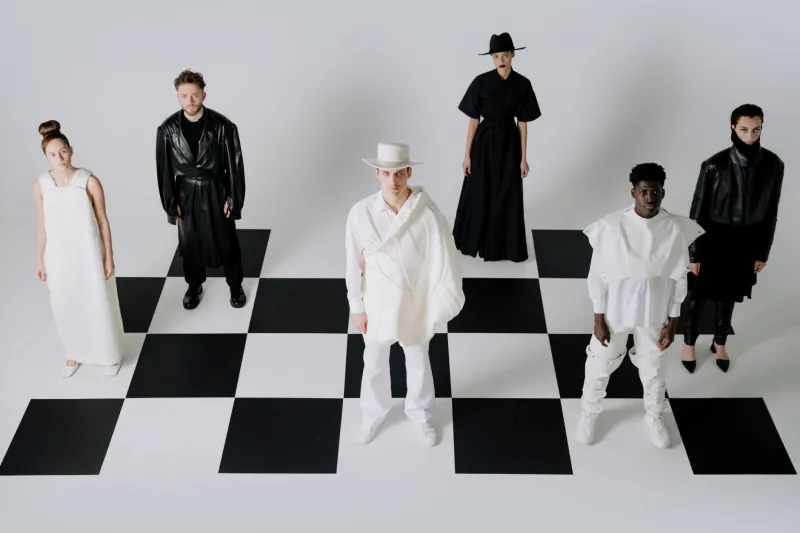
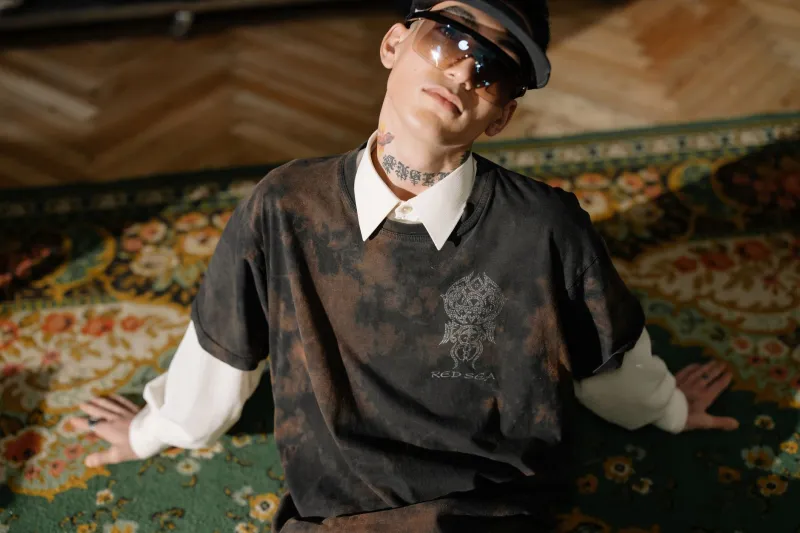
What Gen Z has done is take that same visual language and give it intention. Baggy isn't sloppy anymore. It's considered. You're seeing wide-leg trousers with structured shoulders. You're seeing oversized bombers layered over cropped pieces to create deliberate proportion play. You're seeing silhouettes borrowed from Japanese workwear — roomy, functional, built for movement — paired with American streetwear sensibility. The result is something that reads less like "I don't care" and more like "I care enough to think about this differently."
The Body-Conscious Trap
For a long time, fashion's dominant message was pretty clear: your clothes should reveal the work you've put in. Slim cuts, tapered fits, stretch fabrics — all of it designed to map your body as closely as possible. The underlying assumption was that visibility equals value. Show your shape. Prove your discipline. Let the fit do the talking.
But that logic has a cost. When your clothes are essentially a second skin, every body becomes a performance. Every outfit is an audit. And that's exhausting in a way that goes beyond fashion — it bleeds into how you carry yourself, how much space you allow yourself to take up, how much mental energy you spend managing perception.
Oversized dressing short-circuits that whole system. When the clothes don't map your body, the body stops being the subject. The fit becomes the subject. The person becomes the subject. And suddenly you're not being evaluated on what's underneath — you're being evaluated on your taste, your eye, your ability to pull off something that requires actual confidence to wear well.
That's a fundamentally different kind of visibility. And a lot of people — especially younger consumers who grew up having their bodies scrutinized by social media algorithms — are choosing it deliberately.
Why It Hits Different in Streetwear
Streetwise dressing has always had a complicated relationship with the body. Hip-hop culture gave us the original blueprint for using oversized clothes as a signal of cool, of ease, of not being constrained by what mainstream fashion said was acceptable. Japanese street style — particularly the Harajuku and Ura-Harajuku scenes that Oni Cloth draws heavy inspiration from — took that idea further, treating volume and silhouette as design elements in their own right rather than afterthoughts.
In both traditions, the point was never to hide. It was to reframe. A deliberately oversized silhouette doesn't obscure the person wearing it — it creates a frame around them. It says: here's the shape I've chosen to occupy today. Here's the space I've decided to claim. That's not a passive act. That's authorship.
In 2025, that authorship feels more urgent than ever. When everything from your social media feed to your shopping algorithm is trying to tell you what your body should look like and what you should be wearing to show it off, choosing clothes that exist on your terms — that move the way you move, that prioritize your comfort and your freedom over someone else's aesthetic ideal — is genuinely countercultural.
The Psychology of Taking Up Space
There's actual psychology behind this. Studies on embodied cognition suggest that how we physically inhabit space affects how we feel and how we're perceived. Clothes that allow for expansive movement — that don't restrict, pull, or pinch — have a measurable impact on ease of motion and, by extension, ease of presence. You move differently in a pair of wide-leg trousers than you do in skinny jeans. You carry yourself differently in a boxy coach's jacket than in a fitted blazer.
That difference isn't trivial. It's the difference between clothes that work with your body and clothes that impose a shape on it. And once you've felt that distinction, it's hard to go back.
Gen Z gets this intuitively. They've grown up in an era of unprecedented body scrutiny — filtered selfies, before-and-after culture, fitness influencers whose entire brand is the visible evidence of discipline. The turn toward oversized fits isn't just aesthetic. It's a refusal to participate in that particular economy of visibility. It's choosing to be seen on different terms.
How to Wear It Without Losing the Edge
Here's the thing about oversized dressing: it requires more intention, not less. Throwing on a giant hoodie and calling it a day is easy. Building an actually compelling silhouette out of loose, voluminous pieces takes an eye.
The moves that are working right now: contrast your proportions deliberately. If the top is massive, let the bottom taper — or vice versa. Play with layering to create depth rather than just bulk. Use texture and weight to keep volume from reading as formless. And pay attention to the shoulder — even in an oversized piece, where the shoulder sits tells you everything about whether the fit is working.
Japanese-influenced pieces are doing a lot of the heavy lifting here. Structured over-shirts, wide-cut coach jackets, hakama-inspired trousers — these are garments that were designed from the ground up to be worn with space, and they translate beautifully into a streetwear context without losing their original intelligence.
The Fit That Doesn't Flinch
At the end of the day, the oversized silhouette is winning in 2025 because it represents something people are hungry for: clothes that exist on your terms, not the industry's. Clothes that give you room — literally and psychologically — to move through the world the way you want to move through it.
That's not nostalgia. That's not a trend. That's a value system wearing itself out loud.
Wear it like you mean it.