The $200 Tee Is Cheaper Than You Think: A Brutally Honest Math Lesson on What Basics Actually Cost
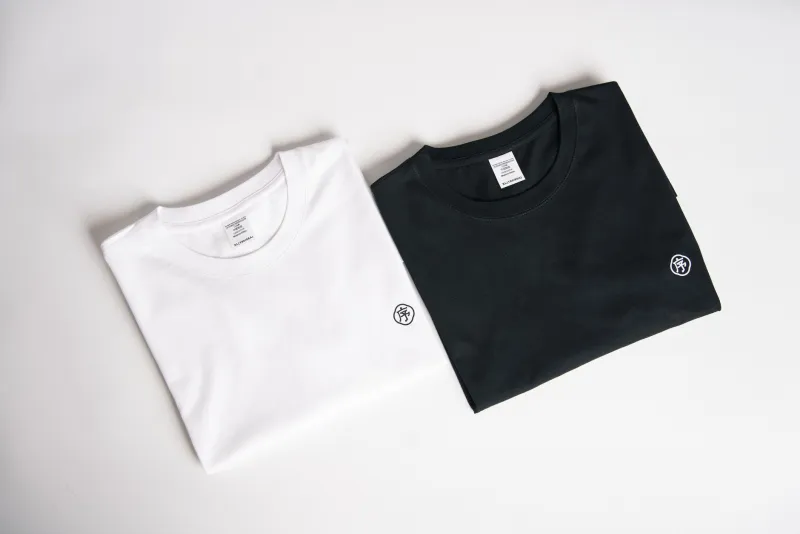
Let's get the uncomfortable part out of the way first: yes, this is an article arguing that you should spend more money on a T-shirt. But stick with it, because the argument isn't about status or brand cachet or some vague notion of quality that nobody can define. It's about math. And the math is not on the side of cheap.
Run the Numbers Nobody Runs
Here's a scenario that plays out constantly in American closets. You buy a three-pack of plain tees for $30. They feel fine in the store. You wear them regularly, wash them regularly, and somewhere around the four-month mark you notice the fabric has gone thin at the collar, the hem is starting to curl, and the color — which was white — is now a specific shade of dingy that no amount of bleach is going to fix. You replace them. Another $30. You do this three times a year.
That's $90 annually on tees that never quite look right after the first wash.
Now consider a Japanese-made plain tee — the kind built from long-staple cotton, sewn with reinforced seams, and cut to maintain its shape through years of wear. It costs $200. It lasts, conservatively, five years with regular use. That's $40 per year. And unlike the $30 option, it doesn't look worse every time you pull it out of the dryer. It holds. It settles. It becomes the piece you actually reach for.
Cost per wear is the metric that makes this obvious, and it's the one the fast fashion industry is most motivated to keep you from calculating.
What "Cheap" Is Actually Paying For
The $30 tee didn't get that price by using better materials or paying fair wages. It got there through a supply chain optimized to extract the lowest possible cost at every step — starting with the cotton, which is often grown with heavy pesticide use, processed in facilities with minimal environmental oversight, dyed with synthetic chemicals, and assembled in factories where labor costs are kept at a legal minimum that rarely reflects a living wage.
You're not saving money when you buy that tee. You're offloading costs onto the people who made it, the communities near the factories, and the environment that absorbs what the production process generates. The price is artificially low because the real cost is distributed elsewhere.
A $200 Japanese-made basic isn't expensive because someone is extracting profit at your expense. It's expensive because the actual cost of making something well — using quality fiber, paying skilled workers, building in the time that craftsmanship requires — is reflected in the price. That's what price honesty looks like.
The Replacement Cycle Nobody Talks About
Fast fashion is designed to be replaced. That's not a cynical reading of the industry — it's the business model stated plainly. Trend cycles have compressed from seasons to weeks. The implicit pitch is that nothing you buy is meant to last, because if it lasted, you'd stop buying.
The replacement cycle has a cost beyond your wallet. The EPA estimates that Americans throw away about 81 pounds of clothing per person per year. The majority of that ends up in landfills, where synthetic fibers — which make up the bulk of cheap basics — do not biodegrade in any meaningful timeframe. The $30 tee you threw out after five months is going to outlast you in a landfill. It just won't be wearable while it does it.
Investment basics break this cycle by design. When a piece is built to last five or ten years, it removes itself from the churn. You buy fewer things. You throw away fewer things. The math works environmentally the same way it works financially — compounding over time in your favor.
The Elitism Accusation, Addressed Directly
The obvious pushback to all of this is that not everyone can afford to spend $200 on a T-shirt, and framing that as the "rational" choice ignores economic reality. That's a fair point and it deserves a straight answer.
Investment basics are not accessible to everyone right now, and pretending otherwise would be dishonest. But the argument being made here isn't "everyone should immediately switch to expensive clothing." It's "when you have the choice and the budget, the expensive basic is the smarter purchase" — and more importantly, it's a challenge to the narrative that cheap equals democratic.
Fast fashion has positioned itself as the accessible option, the one that democratizes style. But it does so while externalizing costs onto the most economically vulnerable people in its supply chain. That's not democratic. That's a different kind of elitism, dressed up as affordability.
Building a smaller wardrobe of better things — buying one piece instead of five, choosing quality over volume — is actually more achievable than the fast fashion industry wants you to believe. The math supports it. The closet space supports it. The environment desperately supports it.
What Basics Are Actually For
A great basic isn't a statement piece. It's the foundation — the thing everything else builds on. When your basics are weak, the whole fit suffers, because the foundation is always visible. A tee that holds its shape, a sweatshirt that doesn't pill after three washes, a pair of trousers with a clean drape — these are the pieces that make everything around them look more intentional.
At Oni Cloth, we've always believed that what you wear is a choice you're making about what you value. A $200 tee that lasts five years and looks better the longer you own it is not a luxury. It's a position. It says you've done the math, you've read the label, and you're not interested in the cheap version of anything.
Wear the edge. And wear it for the long run.