Volume, Void, and Vibe: How the Shape of Your Clothes Is Speaking for You
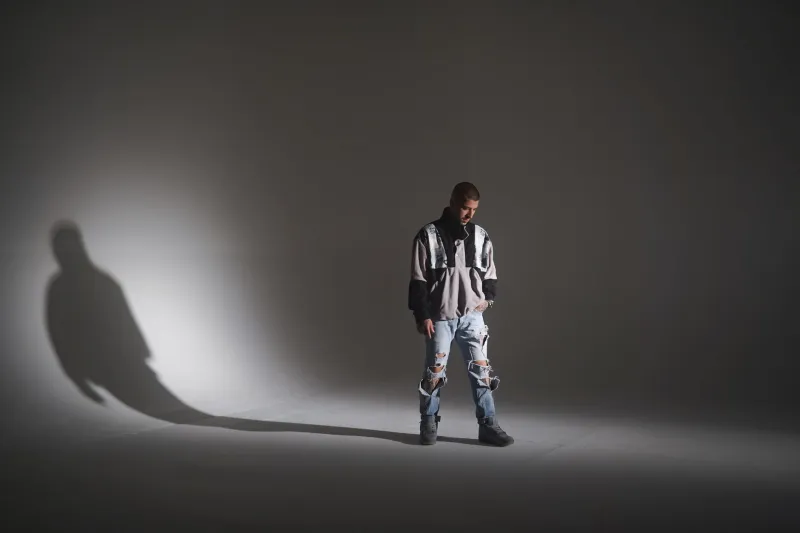
Fashion has always been communication. That's not a new idea. But what's shifted in contemporary streetwear — particularly the aesthetic spaces where Japanese influence, underground culture, and Gen Z sensibility overlap — is how deliberate that communication has become. It's not just about wearing something that looks cool. It's about choosing a shape that says something specific, to a specific audience, about who you are and what you refuse to be.
Silhouette is the grammar of that language. And once you start seeing it, you can't unsee it.
Oversized Isn't Lazy — It's a Claim
Let's start with the most visible element: volume. The oversized fit has been dominant long enough now that some people have started dismissing it as a trend running out of steam. That reading misses the point entirely.
When someone pulls on a drop-shoulder tee that swallows their frame, or a hoodie with sleeves that fall past their wrists, they're not making a statement about not caring. They're making a statement about freedom. Oversized silhouettes reject the idea that clothing should define the body's edges — that a garment's job is to map and present your physical form for external evaluation. Volume creates distance between the body and the gaze. It says: I'm not here for your assessment.
In a culture where young people are relentlessly surveilled — by algorithms, by social media metrics, by the constant pressure to present an optimized version of themselves — choosing to disappear into fabric is genuinely subversive. The oversized fit isn't giving up. It's opting out.
The Cropped Hem as Punctuation
Now flip that logic. If volume is about creating space, the cropped hem is about collapsing it — and the contrast between the two, often worn simultaneously, is where things get interesting.
A cropped jacket over a longline tee. A cropped hoodie with wide-leg pants. These combinations aren't just stylistically balanced — they're structurally argumentative. They set up a tension between exposure and coverage, between what's revealed and what's withheld. That tension is the point.
Think about how punctuation works in writing. A period ends a thought cleanly. A dash creates anticipation. The cropped hem functions like a dash — it interrupts the line of the body mid-sentence, forcing the eye to jump, creating visual momentum. Worn intentionally, it signals someone who understands proportion as a tool, not just an accident of fit.
In contemporary streetwear, the cropped hem also has specific subcultural weight. It carries references from 90s sportswear, from Japanese fashion's love of interrupted hemlines, from the way underground designers have long used unexpected cut points to signal that they're working with a different set of rules.
Asymmetry as Ideology
Of all the silhouette choices circulating in the current streetwear moment, asymmetrical design is probably the most loaded. An off-center zipper. A hem that's longer on one side. A collar that doesn't resolve symmetrically. These aren't design errors — they're refusals.
Symmetry, in fashion as in architecture, historically signals authority, order, and institutional legitimacy. The perfectly balanced suit. The uniform. The corporate dress code. Asymmetry disrupts that visual logic at a structural level. It says: I'm not interested in your idea of balance.
This is why asymmetrical design has such strong roots in Japanese avant-garde fashion — designers like Yohji Yamamoto and Rei Kawakubo built entire philosophies around the idea that clothes don't need to resolve neatly. That incompleteness can be a form of honesty. That the body in motion is never truly symmetrical anyway, so why should the garment pretend otherwise?
When that philosophy filters into contemporary streetwear, it takes on a more confrontational edge. An asymmetrical hem on a graphic hoodie isn't making a quiet philosophical argument — it's making a loud one, in the visual language of the street.
Fabric Pairings and the Logic of Contrast
Silhouette isn't just about cut. Fabric weight and texture are part of the shape conversation too — maybe the most underappreciated part.
Consider the pairing of a structured technical fabric with something deliberately unfinished — raw edges, distressed cotton, visible stitching left exposed. Or the combination of a rigid outer layer with something fluid and lightweight underneath, visible at the hem or cuffs. These aren't just textural choices. They're statements about contradiction — about the idea that a person can contain multiples, that softness and armor aren't opposites.
This is particularly resonant in the techwear-adjacent spaces where Oni Cloth operates. Garments that look functional, almost utilitarian, but are worn in contexts that are anything but — that contrast between the implied purpose of the fabric and the actual context of its use is its own form of commentary. It's wearing the gear for a mission that isn't about survival in any literal sense, but maybe is in an emotional one.
Structural Chaos and the Deliberate Mess
There's a silhouette move that's harder to articulate but unmistakable when you see it: the deliberate embrace of structural chaos. Layering that shouldn't technically work but does. Proportions that violate conventional rules of balance. Fits that look like they're in the middle of becoming something else.
This is probably the most advanced level of the visual dialect — the equivalent of complex syntax. It requires the wearer to have enough fluency in the language that they can break the rules in ways that read as intentional rather than accidental. The difference between a fit that looks chaotic because someone didn't think about it and a fit that looks chaotic because someone absolutely thought about it is visible to anyone paying attention.
The brands and communities that operate in this space — Japanese streetwear, underground American labels, the overlap between both — have been developing this grammar for long enough that there's a shared literacy around it. When someone walks into a room in a fit that's structurally chaotic in all the right ways, the people who speak the language recognize it immediately.
Reading the Room You're Dressed For
All of this raises a question worth sitting with: who are you dressing for, and what are you trying to say?
Not in a self-conscious, overthought way. Most people who are fluent in this visual dialect aren't narrating their silhouette choices as they make them. It's more intuitive than that — a feeling about what's right for who you are right now, in this moment, with these people.
But the intentionality is still there, even when it's operating below the level of conscious decision-making. The shape you choose communicates before you speak. It signals tribe, values, references, and refusals. It tells people what conversation you're interested in having and what conversation you're done with.
That's not a small thing. In a world full of noise, the fit that says exactly what you mean — without a word — is its own kind of power.
Wear it accordingly.