Dirt, Bark, and Indigo: The Natural Dye Underground That's Making Synthetic Color Look Cheap
There's a specific kind of disappointment that hits when you pull a new piece out of the wash and it looks exactly the same as the day you bought it. Uniform. Locked in. Dead. That's synthetic dye doing its job — maintaining a color that was engineered in a lab to never change, never breathe, never become anything other than what it started as.
For a growing number of independent dyers and small streetwear labels, that consistency isn't a feature. It's the problem.
The Vat Is the Studio
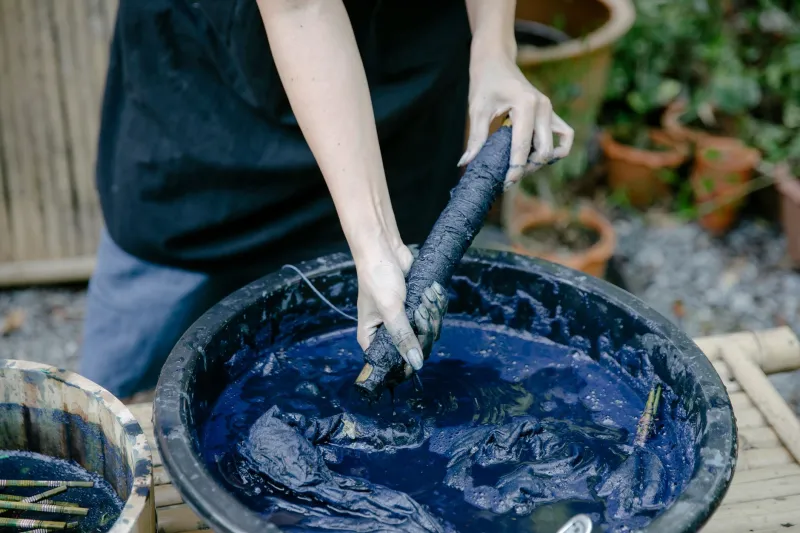
All over the country — in garage workshops in Portland, converted storage units in Brooklyn, and sun-drenched backyards in New Mexico — a loose community of textile artisans is rebuilding the way streetwear gets its color. They're working with indigo, black walnut hulls, madder root, iron-rich mud, pomegranate rind, and dozens of other plant and mineral sources that have been used to dye cloth for thousands of years.
The irony is that this ancient practice feels more radical right now than almost anything happening on a runway.
"Synthetic dye is everywhere because it's cheap and predictable," says one Portland-based independent dyer who runs a small-batch operation out of her home studio. "But predictable is exactly what people are sick of. When I hand someone a piece that was dyed with black walnut, they can feel that something different happened to it. The color has depth. It has a history."
That depth is literal, not just poetic. Natural dyes penetrate fiber differently than synthetic alternatives. They interact with the material's actual structure, which means the color shifts as the fabric ages, stretches, and responds to light. A naturally indigo-dyed hoodie doesn't fade — it evolves. The creases get lighter. The wear points develop their own character. You end up with a garment that documents your relationship with it.
Why Gen Z Is Paying Attention
The generation that grew up with fast fashion's peak dominance is also the one most visibly exhausted by it. The $15 tee that looks great in the photo and falls apart after six months. The "limited drop" that's available in 40 colorways. The visual sameness of clothing that was designed by algorithm and colored to photograph well under ring lights.
Natural dye disrupts all of that on a fundamental level. You cannot mass-produce it at scale without losing what makes it interesting. Batch variation is built in — two pieces dyed in the same pot on the same day will still come out slightly different, depending on where they sat in the vat, how the mordant took, what the water chemistry was doing. That inconsistency is the point.
For a consumer base that has spent years watching brands fake exclusivity, an actual guarantee of uniqueness hits different.
"I sold out my first naturally dyed run in under two hours," says a New York-based streetwear designer who recently transitioned his basics line to plant-based color. "People weren't just buying the piece. They were buying the idea that nobody else has the exact same version of it. That's real limited edition. Not fake scarcity — actual variation."
The Sustainability Angle Nobody Is Overstating
Synthetic textile dyes are responsible for roughly 20 percent of global industrial water pollution. The chemicals used in conventional dyeing processes — many of them classified as hazardous — end up in waterways, particularly in countries where production oversight is minimal. When you buy a mass-produced piece in a bright, consistent color, that color came at a cost that isn't reflected in the price tag.
Natural dyes aren't perfect — some mordants used to fix color to fiber have their own environmental considerations — but the overall footprint is dramatically smaller. Most plant-based dye operations use local or regionally sourced materials, small water volumes, and processes that don't generate toxic runoff. Some are zero-waste by design, with spent dye baths composted or reused.
What makes this compelling to the streetwear conversation specifically is that it reframes sustainability not as a sacrifice but as an aesthetic upgrade. You're not giving up color for the sake of the planet. You're getting better color — richer, stranger, more alive — and the environmental benefit is almost a side effect.
Aging Like Something Real
The most compelling argument for naturally dyed clothing isn't environmental or even economic. It's about what the piece becomes over time.
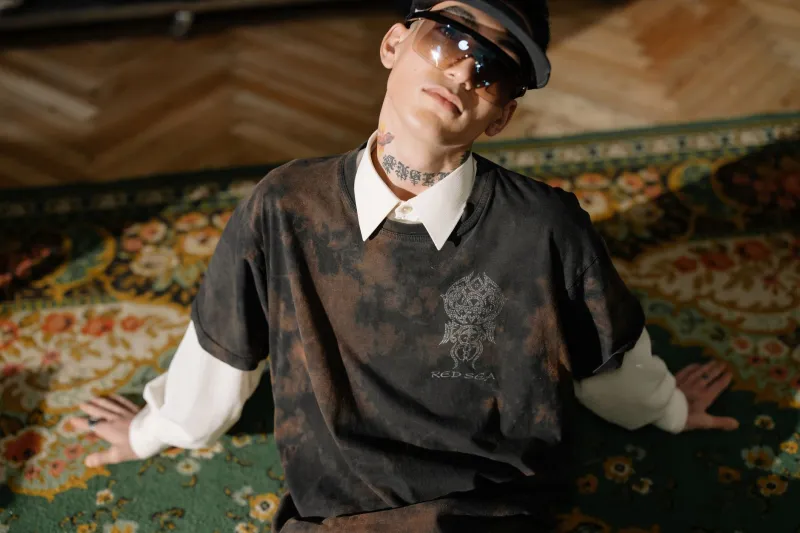
Synthetic dyes age badly. The color doesn't so much develop as it deteriorates — becoming chalky, uneven in the wrong ways, dull in a way that reads as cheap. Natural dyes age the way leather ages, the way raw denim ages. The wear patterns tell a story. An indigo-dyed jacket that's been through two years of regular use looks intentional. It looks like something that was lived in, not just worn.
This is the opposite of disposable fashion's entire logic. Disposable fashion assumes you'll replace the piece before it gets a chance to age. Natural dye assumes you won't — and designs the color to reward you for keeping it.
"My customers come back to show me their pieces six months later," says the Portland dyer. "They're proud of how it's changed. That's not something that happens with a Target tee."
What This Means for the Culture
At Oni Cloth, we talk a lot about wearing something that means something. Natural dye is a direct expression of that ethos — a rejection of the industrial color palette that makes everyone look like they ordered from the same warehouse. It's craft that shows up in the cloth itself, not just in the branding.
The underground is doing the work right now. Small studios, independent dyers, brands willing to slow down and do it the hard way. If you've been looking for a way to build a wardrobe that actually has character — pieces that become more yours the longer you wear them — the vat is where it starts.