Cotton Doesn't Lie: Why a Generation Is Burning Its Moisture-Wicking Phase
There's a specific kind of exhaustion that comes from wearing a shirt that's trying too hard. You know the one — four-way stretch, anti-odor technology, UV protection, moisture management, quick-dry everything. It sounds like a resume. It wears like one too.
Gen Z noticed. And quietly, then loudly, they started walking away.
The backlash against performance fabrics in streetwear and everyday dress isn't some nostalgic trend cooked up by vintage resellers. It's a genuine cultural shift — one rooted in something deeper than aesthetics. For a generation that grew up watching brands promise them the future and deliver disposable garbage, choosing a heavyweight cotton tee or a scratchy wool crewneck feels less like a style choice and more like a personal manifesto.
The Problem with Fabrics That 'Do Too Much'
Performance textiles exploded in the 2010s. Athleisure took over, activewear bled into casualwear, and suddenly every major retailer was selling you the idea that your clothing should work as hard as you do. Moisture-wicking. Compression. Thermal regulation. Smart fibers that responded to your body. It was innovation marketed as liberation.
But something got lost in the pitch.
The more 'functional' a fabric became, the less it felt like anything at all. That slick, synthetic hand-feel — slippery, weightless, almost frictionless — started to register as absence rather than advancement. You weren't wearing a garment. You were wearing a product.
Designer Marcus Webb, who runs a small-batch label out of Portland making unbleached cotton and raw wool pieces, puts it plainly: "People got tired of clothes that felt like they were made in a lab for a body that doesn't exist. Cotton wrinkles. Wool pills. Linen gets stiff. That's the whole point. That's how you know it's real."
He's not alone in that read.
Authenticity as Rebellion
In a culture saturated with optimization — biohacking, productivity stacks, self-quantification — choosing a material that doesn't promise anything beyond basic coverage is genuinely countercultural. It's opting out of the performance economy at the most literal level.
Talk to younger consumers at any streetwear market or independent label pop-up and you'll hear the same language over and over: honest, real, nothing to hide. These aren't just adjectives. They're values mapped onto fiber content.
Jade, a 23-year-old stylist based in Brooklyn, describes her shift away from synthetics as something that happened gradually, then all at once. "I had this whole drawer of 'technical' stuff — moisture-wicking tees, stretch-everything pants. And I just stopped reaching for any of it. It all felt like wearing a lie. Like the fabric was performing wellness at me."
That phrase — performing wellness — is doing a lot of work right now. Gen Z grew up in the golden age of wellness marketing, where everything from water bottles to mattresses promised to optimize your existence. Fashion was no different. And the generation that learned to clock inauthenticity faster than any before it eventually extended that radar to what they were wearing.
What They're Reaching for Instead
The materials showing up in independent streetwear right now read like a textile history class: heavyweight ring-spun cotton, Japanese selvedge denim, boiled wool, raw linen, unfinished canvas. Fabrics with texture, with weight, with a clear origin story.
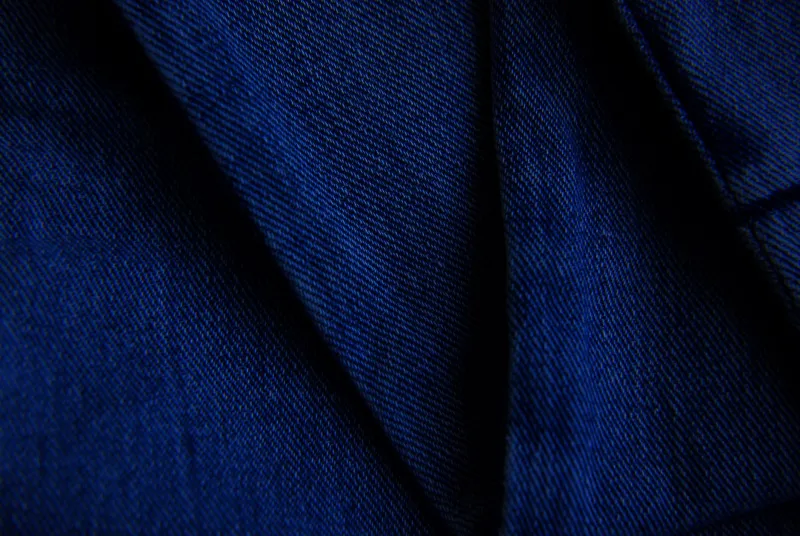
Japanese workwear and traditional American heritage brands have been pulling significant influence here — not because they're trendy, but because they built entire identities around material honesty. A 14-oz. denim jacket from a small domestic maker doesn't need to tell you it's durable. You can feel it.
Several emerging American labels are leaning hard into this. Brands operating out of places like Detroit, Los Angeles, and Asheville are quietly building followings by leading with fabric first — listing fiber content, weight, and origin before they even describe the silhouette. It's a reversal of the usual marketing playbook, and younger consumers are responding to it like they've been waiting for someone to finally speak their language.
"The product page shouldn't be a fairy tale," says Dani Okafor, who co-founded a Chicago-based label focused on natural-fiber basics. "Tell me what it's made of, where it came from, how it's going to age. That's the whole story. I don't need the rest."
The Performance Fabric Isn't Dead — It's Just Misplaced
To be fair, this isn't a blanket condemnation of technical textiles. Climbers need Gore-Tex. Cyclists need compression. There are legitimate use cases for every synthetic innovation that's ever been developed.
The issue isn't the fabric. It's the context.
When a moisture-wicking quarter-zip becomes your default 'going out' layer, something has gone sideways. When your everyday wardrobe is composed entirely of materials that were engineered for endurance athletics, you've let optimization colonize the parts of your life that don't need it.
What Gen Z is pushing back against isn't functionality — it's the creep of functional logic into every corner of daily existence. Your commute doesn't need to be 'performance-optimized.' Your Saturday afternoon doesn't require sweat management technology. Sometimes a heavy cotton sweatshirt that wrinkles when you sit down and takes forever to dry is exactly the right answer.
The Texture of a Real Thing
There's something almost philosophical about this moment. We talk a lot about authenticity in fashion — authentic to your identity, authentic to your culture, authentic to your roots. But authenticity starts at the material level. It starts with what's actually touching your skin.
A fabric that ages with you, that takes on your shape, that fades where you fold it and wears through where you work it — that's a garment with a biography. A moisture-wicking polyester blend that looks exactly the same in year three as it did on day one hasn't lived anywhere. It's just existed.
Gen Z, for all the ways they've been caricatured as digital and detached, seems to understand this intuitively. They want things that are somewhere. Things that carry evidence of being real.
Cotton wrinkles. Wool pills. Linen goes soft in the places you touch most.
That's not a flaw. That's the whole conversation.